Agralon Drone Spraying Services helps Zimbabwean farmers apply pesticides, herbicides, fungicides and insecticides with pinpoint accuracy โ cutting chemical use, labour costs and crop losses.
As passionate farmers in Zimbabwe, we've experienced firsthand the challenges of crop loss due to pests and poor fertilizer application โ watching crops wither despite our best efforts, season after season.
That frustration is what drove us to bring automated drone spraying to Zimbabwean agriculture. With drones, farmers can move past the limits of traditional spraying and achieve better yields, lower costs, and a lighter environmental footprint.
Source: Zimbabwe National Statistics Agency (ZimStat) โ agriculture contributes ~15% of GDP and employs ~70% of the national labour force.
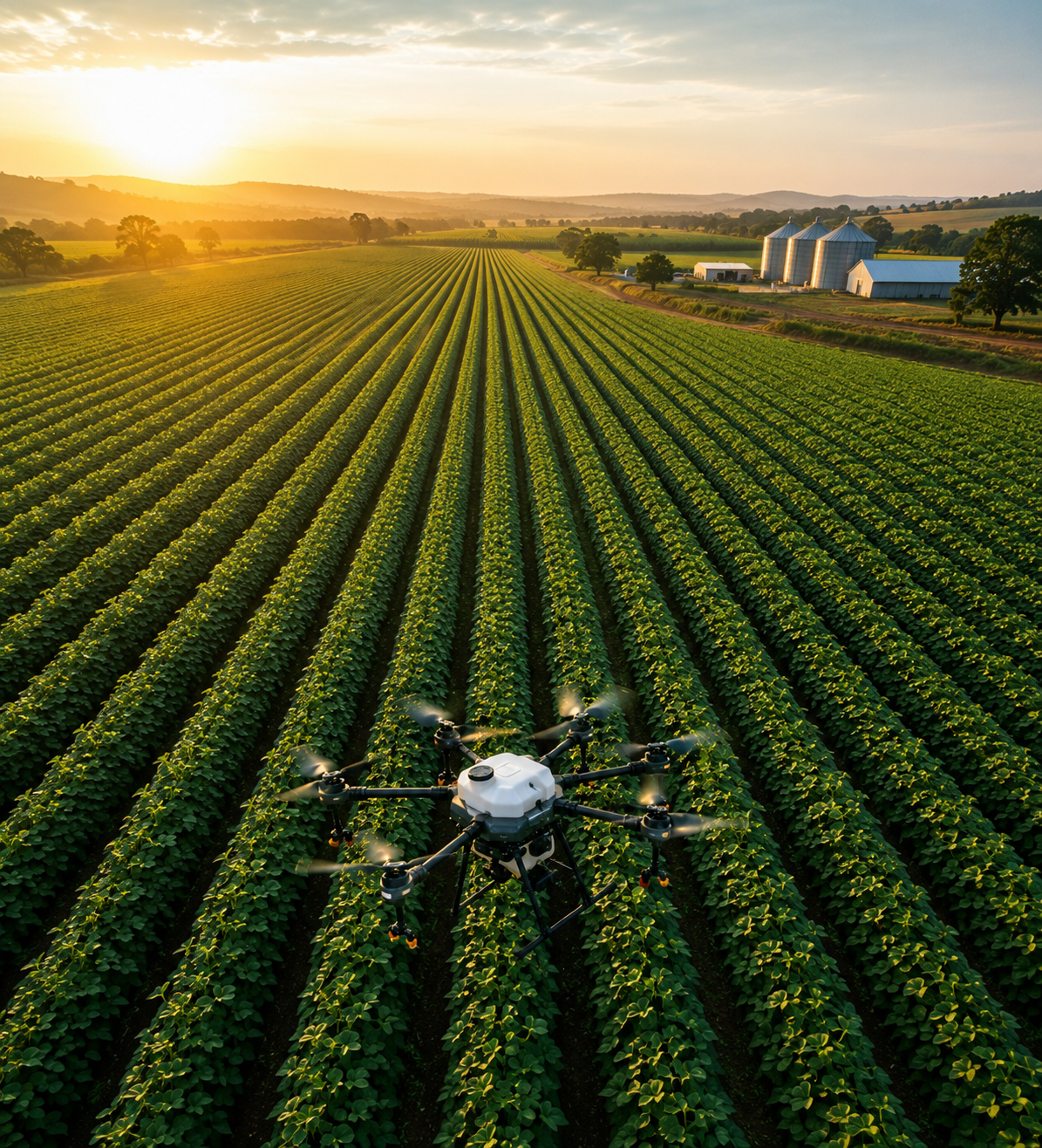
State-of-the-art drones apply pesticides and fertilizers with precision navigation and sensors โ guided by a spraying plan built around your farm.
We review your crop, field layout and pest pressure to understand exactly what your farm needs.
Our team develops a tailored spraying plan โ pre-spraying, mid-spraying or post-spraying โ for your crop cycle.
Drones equipped with advanced navigation and sensors apply chemicals evenly across every hectare.
Optional soil, plant and yield monitoring keeps you informed on crop health long after the spray.
According to a University of Zimbabwe study, drone spraying can increase pesticide application accuracy by up to 90%.
Knapsack and manual spraying methods are slow, labour-heavy and often inaccurate. Drones close that gap.
Independent studies and our own client data show what precision drone spraying delivers on the ground.
FAO data shows Zimbabwean farmers use ~3.4kg/ha of pesticide annually โ drone precision can cut this significantly.
ICRISAT research found drone spraying can reduce labour costs on farms by up to half.
Agralon client data shows an average 30% saving on chemical costs and 25% on labour costs.
Farmers spend ~20 hours/hectare/season on manual spraying โ drones cut that time by up to 90%.
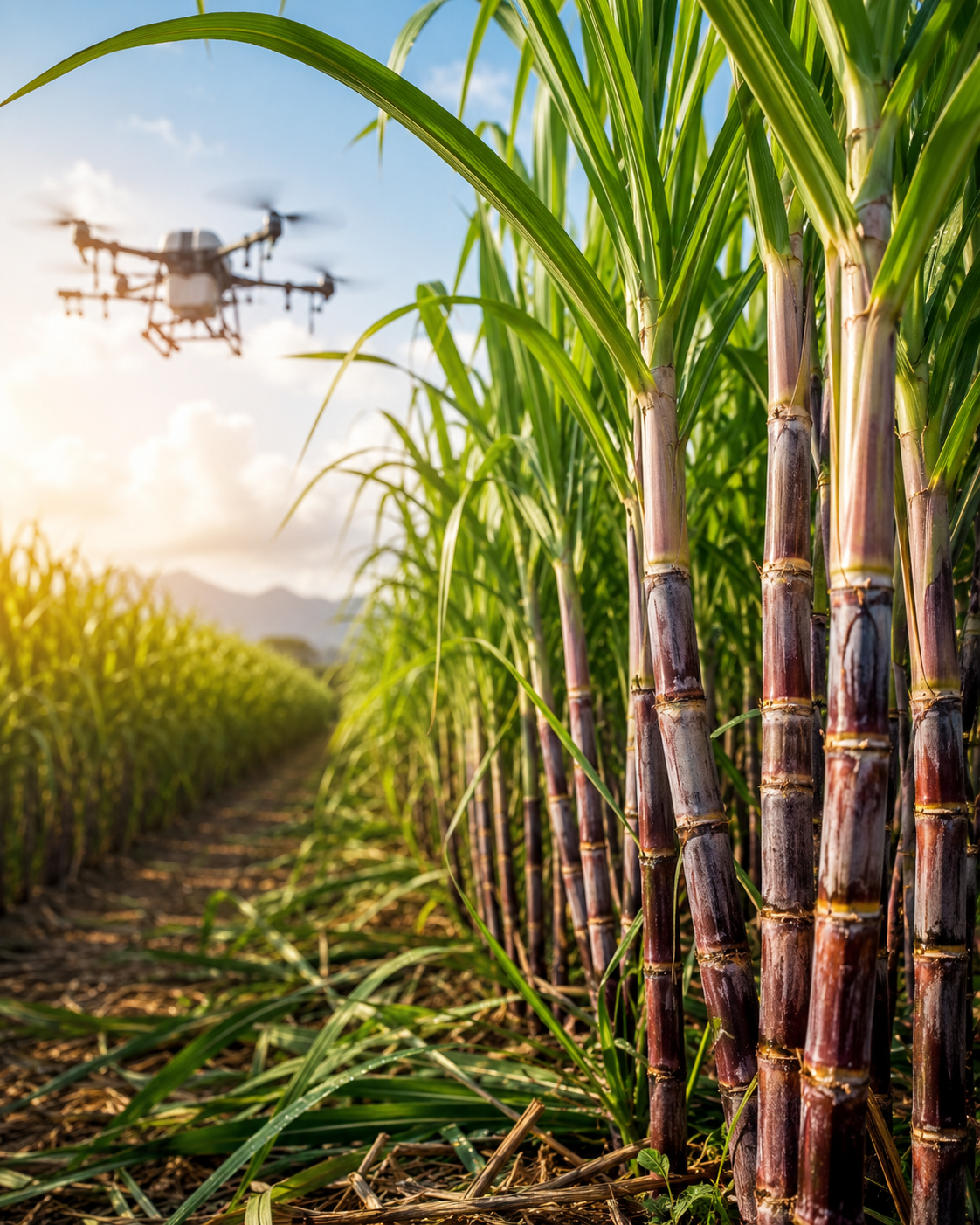
Zimbabwe produces around 400,000 tons of sugar annually, most of it exported. Sugarcane is highly susceptible to pests that drone spraying is built to manage.
Stalk borer (Eldana), top shoot borer and Chilo spp. bore into stalks, causing dead hearts and reduced sugar content.
Aphids, mealybugs and whiteflies feed on plant sap, weaken the crop and can transmit disease.
White grubs and termites damage roots and stalks, especially in young plantings.
For more information or to book a service, get in touch with our team today.
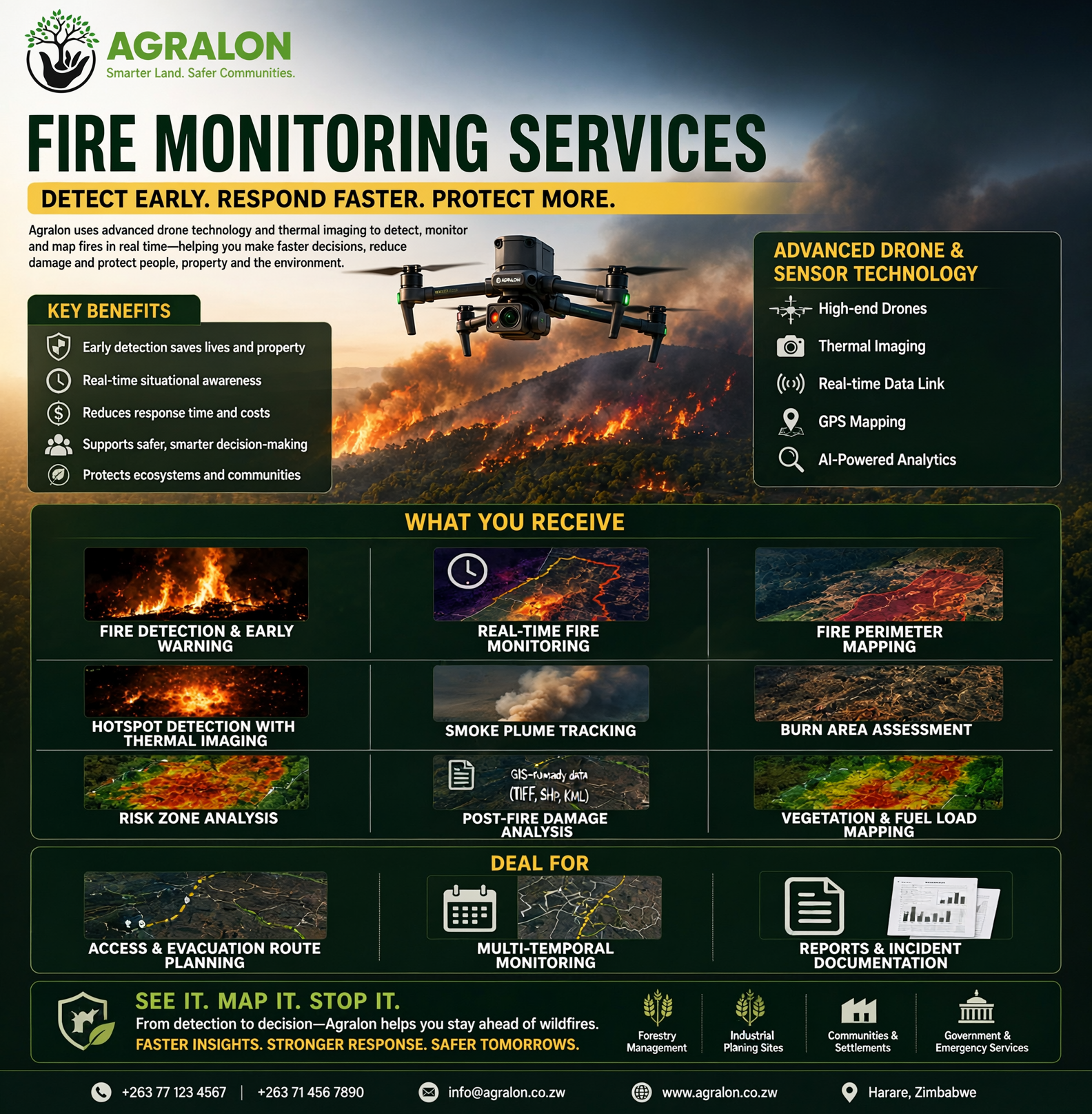
Agralon uses advanced drone technology and thermal imaging to detect, monitor and map fires in real time โ helping you make faster decisions, reduce damage and protect people, property and the environment.
Source: Zimbabwe National Statistics Agency (ZimStat) โ agriculture contributes ~15% of GDP and employs ~70% of the national labour force.
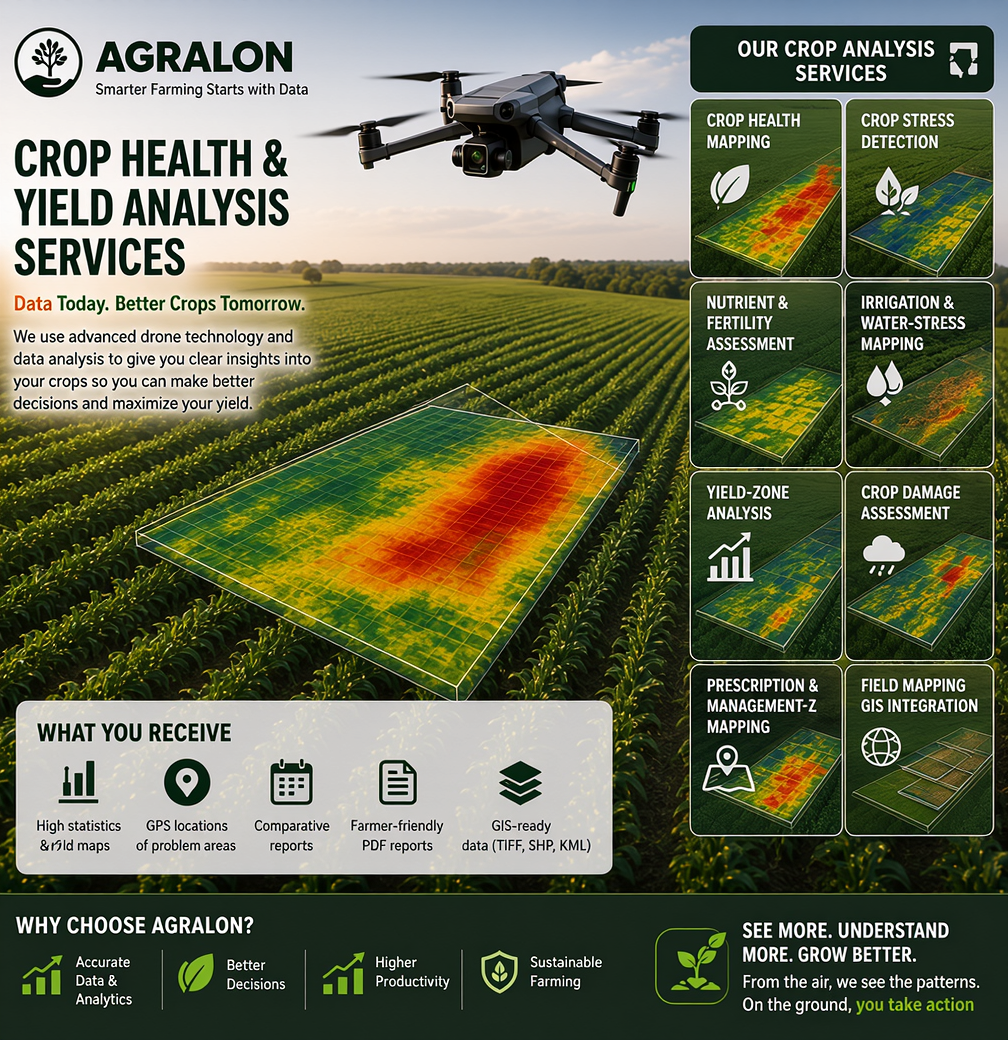
We use advanced drone technology and data analysis to give you clear insights into your crops โ so you can make better decisions and maximise your yield.
Source: Zimbabwe National Statistics Agency (ZimStat) โ agriculture contributes ~15% of GDP and employs ~70% of the national labour force.
Our team is ready to help you take your farming operation to the next level. Let's build a more sustainable and productive season together.
Donovan โ Marketer